


Trump is in another unwinnable war – this time with the bond market
Trump is in another unwinnable war – this time with the bond market

Hans van LeeuwenSun, August 23, 2026 at 5:00 AM UTC
0
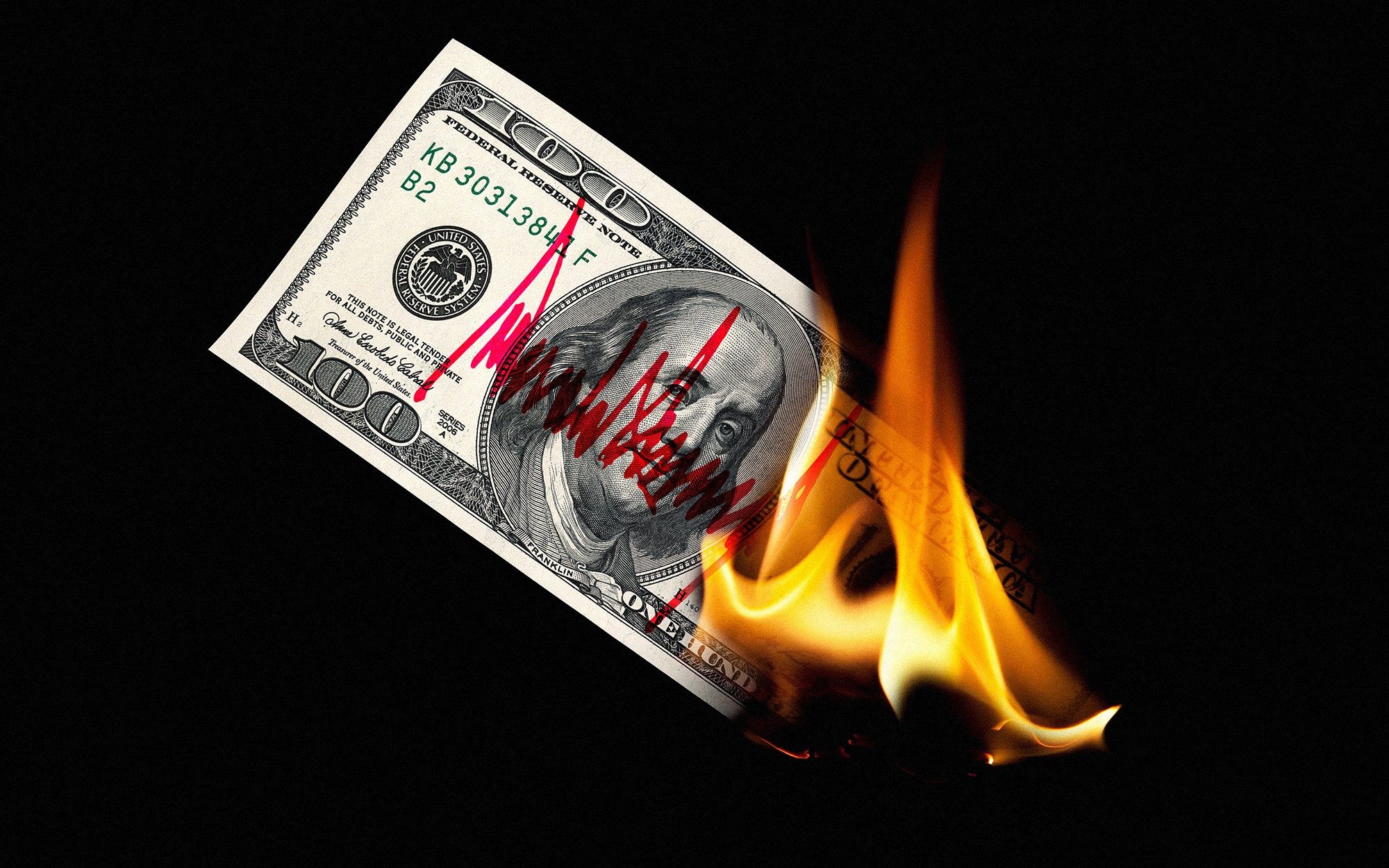
Scott Bessent, the US treasury secretary, celebrated his 64th birthday on Friday. But it probably wasn’t his happiest.
Two days earlier, he’d decided to give himself an early birthday present. Facing turmoil in financial markets, he told his officials to double the amount of long-term US government bonds they should buy back from the market in the next few months, to $4bn (£3bn).
In a way, it was meant as a gift for all of us.
Bessent wasn’t thinking about blowing out the candles on his birthday cake. By shoring up the market for the bonds, known as US Treasuries, he was hoping to stop restive bond vigilantes from blowing the lights out on the entire global economy.
Donald Trump has frequently staked his reputation as president on the success of Wall Street as well as the wider US economy.
From bashing the Federal Reserve over high interest rates to taking credit for record stock market highs, the president has taken a more hands-on approach to financial markets than most.
So with the US Treasuries market in freefall last week, he tasked Bessent with stemming the slide and calming the nerves of bond investors.
Bessent’s tactic was simple: if nobody else wants to buy unloved US 10-year and 30-year bonds, well, he’ll buy them himself.
This spurt of artificial demand is meant to push up the bonds’ prices, lowering their yields – the interest the US must pay for borrowing bondholders’ money. Even tiny falls in the yield can cut hundreds of billions from the indebted Trump administration’s gargantuan interest bill.
Bessent hoped his bond-buying would restore the vigilantes’ confidence that although he had not tamed runaway US borrowing, at least he had its price under control.
The plan didn’t quite come off, at least on the first try. The yields did fall, but bounced right back. Bessent then promised to buy even more, and said he’d look at the budget and find ways to borrow less.
Catching a cold
Trump urged the American public not to worry about the bond markets’ jitters. Asked whether Americans should fret, the president said: “No, I don’t think so. Our country is doing so well despite interest rates.”
He later advocated for Bessent by claiming he has “a very natural touch for the bonds”.
But if Bessent’s gambit fails, the markets could take serious fright. That would send the cost of borrowing soaring – and not just in the US.
“If the US catches a cold, all of you are going to get pneumonia,” says Joseph Brusuelas, the chief economist at accounting and consultancy firm RSM.
Governments, including Britain’s, will be forced either to tighten their belts or to let inflation run riot.
Mortgages will get more expensive. Investment in roads, schools and hospitals will have to shrink. Taxes will have to rise. Businesses will struggle, jobs will be lost, economies will falter.
In Britain, Andy Burnham, like birthday boy Bessent, wants to have his cake and eat it: to keep the bond market sweet without hurting his voters.
But he’s also in a bind. If he spends more, the market will make him pay a lot more for it. That will curb his ability to keep spending, and will also hit voters straight in the wallet.
Burnham is only the latest in a long line of politicians to rail against being in hock to the bond vigilantes.
James Carville, an adviser to the then US president, Bill Clinton, famously said in 1993 that he no longer wanted to be reincarnated as pope or president, but as the all-powerful bond market that could “intimidate everybody”.
It may have been ever thus, but right now things feel different.
Although bond investors have always had a leash on politicians, this summer they may be properly tightening it for the first time in decades.
Bond yields in the US, Japan, Britain and France are now the highest since before the global financial crisis of 2007-2008.
Ever since that meltdown, the market has largely allowed governments in some of the world’s biggest and richest economies to borrow cheaply and easily.
Given that licence, politicians have piled up debt rather than make hard choices on tax and spending.
But the party is coming to an end. Like a council noise inspector knocking on the door at 2am, the bond market is politely asking the revellers to tone things down and sober up.
Bessent’s response, with his bond-buying programme, has merely been to turn down the volume a little.
But there’s no sign that Trump, or any other Western leader, is ready to change their tune.
This week the US government debt pile topped $40tn. In the five minutes it might take you to read this article, it will increase by another $27m.
The budget deficit, which all these US bonds are supposed to fund, is still almost 6pc of US gross domestic product.
As Bessent pointed out on Thursday, that’s a bit less than last year. But it’s still miles above any kind of safety zone, including the 3pc figure he says he’s targeting for 2028.
The treasury secretary says that in the coming days he’ll explain how he’s going to do this “fiscal consolidation”.
But Trump has dished out $4tn in tax cuts and extra spending since returning to office, and the tab for health and social security is rising relentlessly.
The cost of his now six-month-old “excursion” to Iran is also mounting. Trump has asked Congress to more than double defence spending to $1.5tn a year.
US government debt is on course to hit 120pc of GDP in the next decade, far exceeding the record set just after the Second World War.
Trump’s gamble, with the world’s biggest debt stockpile, is that he can keep the party going. But in trying to take on the bondvigilantes, Trump and Bessent may inadvertently have started another unwinnable war.
A fire waiting to be lit
The president is banking on Bessent, a former hedge fund boss, to hold the fun police at bay.
Bessent is the poacher turned gamekeeper. A political science graduate from Yale University, he made his name as a financier while working for the billionaire currency speculator George Soros.
Under Soros’s tutelage in 1992, he was part of the team that engineered the Black Wednesday collapse of the pound.
He later founded an eponymous billion-dollar hedge fund, with a side hustle in real estate. Eventually he returned to Soros, making a massive and highly profitable bet against the Japanese yen. But he remained restless and ambitious.
He began donating to both the Democrats and Republicans in the early 2000s, but threw his financial heft behind Trump in 2017. The reward was his appointment as treasury secretary in January last year.
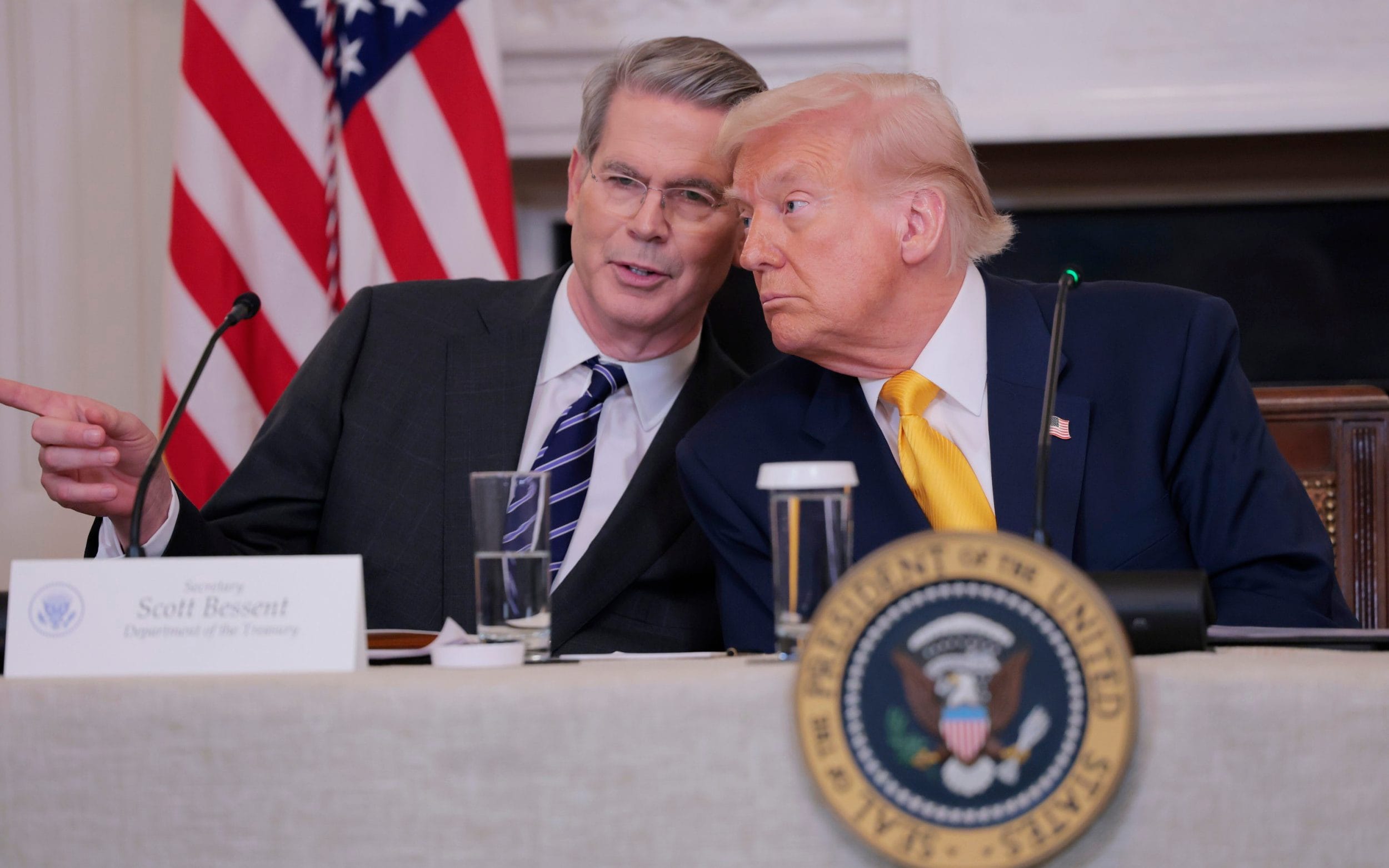
Donald Trump’s treasury secretary Scott Bessent has been described as ‘a bit of a thug’ - Anna Moneymaker/Getty Images
“I would not bet against Scott Bessent, but he has something to prove,” says an experienced money manager who knows him.
He’s “a bit of a thug”, the manager says, but in an almost complimentary way. Bessent is willing to do what it takes – and rough people up to get things done.
Wall Street veterans who met him during his Soros stint recall him having a whiteboard in his office plastered with a quote from Stephen Covey, author of The Seven Habits of Highly Effective People: “The main thing is the main thing is the main thing.”
The main thing now is to prevent a financial earthquake. But the tectonic plates are shifting under the world in which Bessent prospered.
Inflation just won’t subside, as the planet reels from wars in Ukraine and Iran, upended oil and gas supplies, trade fights and weather crises. Interest rates may end up climbing higher – and staying there.
Central banks are no longer juicing their economies by buying bonds. The “quantitative easing” of the financial crisis and the pandemic is over.
In fact, they’re selling all those bonds. This is driving up the bonds’ yields, which are the ever-steepening interest rates that governments pay to fund their yawning budget deficits.
Meanwhile, America’s AI revolution is sucking hundreds of billions of capital out of the US and European government bond markets, as debt investors instead opt to help tech giants borrow to build data centres.
Some traditionally big bond buyers, such as Gulf sovereign wealth funds, Chinese banks and Japanese life insurers, are also investing closer to home.
Others are looking at Trump’s fiscal incontinence and geopolitical blow-ups and demanding higher yields in return for bankrolling the debt-heavy budgets of the 2030s.
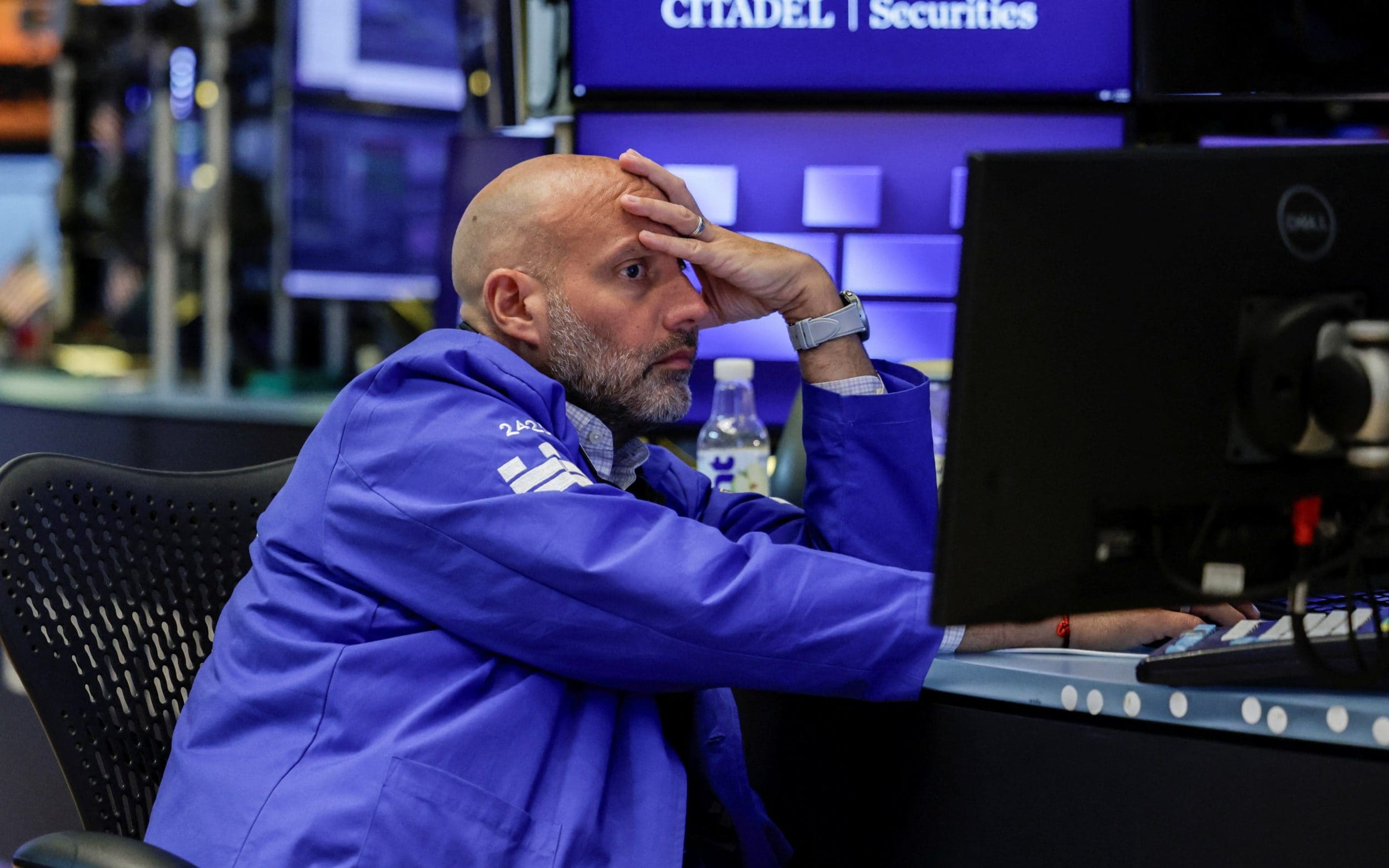
Donald Trump’s geopolitical blow-ups have worried traders - Jeenah Moon/REUTERS
This cocktail of geopolitics, disruption, profligacy, technology and uncertainty is looking highly combustible, says Bill Campbell, a portfolio manager at DoubleLine Capital.
“We sure have built up a large can of gasoline with these issues. The can of gasoline is now full and continuing to be filled ever more,” the California-based veteran says.
“It’s impossible to tell what is going to be the exact match that ignites this fire.”
Bond investors range from sanguine to scared, and from convinced to confused. But most agree on one thing: if Trump and Bessent lose the faith of the bond market, they’ll take Burnham, French President Emmanuel Macron and Japanese Prime Minister Sanae Takaichi down with them.
The chances of this are rising, warns Mohamed El-Erian, an economics professor and finance veteran. “Are we in flashing yellow light territory? Yes, we are. When does this go red? I don’t know.”
He and Campbell are not the only ones unsure about what might set the market on fire.
It might be a new Liz Truss moment. It might be the bursting of the AI bubble. Or it might be a so-called “black swan” – something unlikely and unforeseen that sideswipes an unsuspecting market and causes panic.
Or the trigger could simply be the gradual ratchet of higher and higher yields, with governments as the proverbial frogs in boiling water.
Whichever it is, it will tighten the leash around profligate governments, making it almost impossible to spend more or cut taxes.
Advertisement
“Politicians live to avoid hard choices. The bond market is going to force those choices to the forefront,” Brusuelas says.
No matter what choice politicians make, there’s one certain outcome: we voters will feel it in our pockets, whether through higher prices, interest rates or taxes.
For us, the choices are painful; for them, the choices are existential.
Trump faces mid-term Congressional elections in November that his Republican Party could quite possibly lose. So he will be keenest of all to duck those choices.
Pick your poison
Trump, Burnham, Macron, Takaichi and other leaders are staring at the cresting wave of a potential bond sell-off – and all are racing for different lifeboats.
There’s one option that is available only to Trump: strong economic growth. As Liz Truss repeatedly pointed out, if your economy is expanding vigorously, you can afford your interest rate bill.
That isn’t as plausible in the sluggish economies of Britain, France and Japan.
Britain’s lifeboat is its fiscal rules, which bond markets essentially forced on to the country after the Truss mini-Budget.
“The UK already pays the highest risk premium amongst the G7 countries, so the constraint is a lot more serious,” says Brusuelas.
He says Britain will keep borrowing, but will have to spend less or tax more. “That goes by another name,” he says. “It’s called austerity policy. It’s terribly unpopular in Great Britain.”
What’s more, says El-Erian, “we have found that austerity doesn’t last – it’s hard to maintain austerity unless you fundamentally reform your budget”.
France’s tactic is to bury its head in the sand. Its stated goal is to shrink the deficit from 5.1pc of GDP this year to 3pc by 2029.
But its parliament is gridlocked, and can’t agree on reforms. The economy is beset by fires, drought and high energy prices. And politicians are jockeying for a presidential election in April next year.
“No candidates are promising to cut spending, they are promising to expand spending. And the majority in the assembly is not there to pass courageous measures. So the dynamic is not very favourable for France,” says Guillaume Rigeade, of French fund manager Carmignac.
France, though, has the European Central Bank standing at its back. If the spread between its bond yields and Germany’s widens too far, Frankfurt will send in the financial fire brigade.
In Japan, the debt-to-GDP ratio is more than double that of France and Britain, and the 10-year bond yield has reached heights not seen since the 1990s.
But Takaichi is going for broke. Her choice is tax cuts and spending increases to stimulate the economy, leaving the Bank of Japan to take care of inflation.
Campbell says she’s taking a big risk. “You throw a lot of fiscal [largesse], hoping that growth is then going to pick up and get you into this virtuous cycle. Maybe. But if it doesn’t work, you’re in big trouble.”
Trump vs the vigilantes
Trump has a foot in all these lifeboats.
He took an early look at austerity, after Bessent vowed to halve the budget deficit by 2028. Elon Musk was drafted in to swing a chainsaw, but exited having done little more than some pruning.
Trump then went a bit like Takaichi in Japan, introducing the One Beautiful Bill Act stuffed with $4tn of tax cuts and spending pledges.
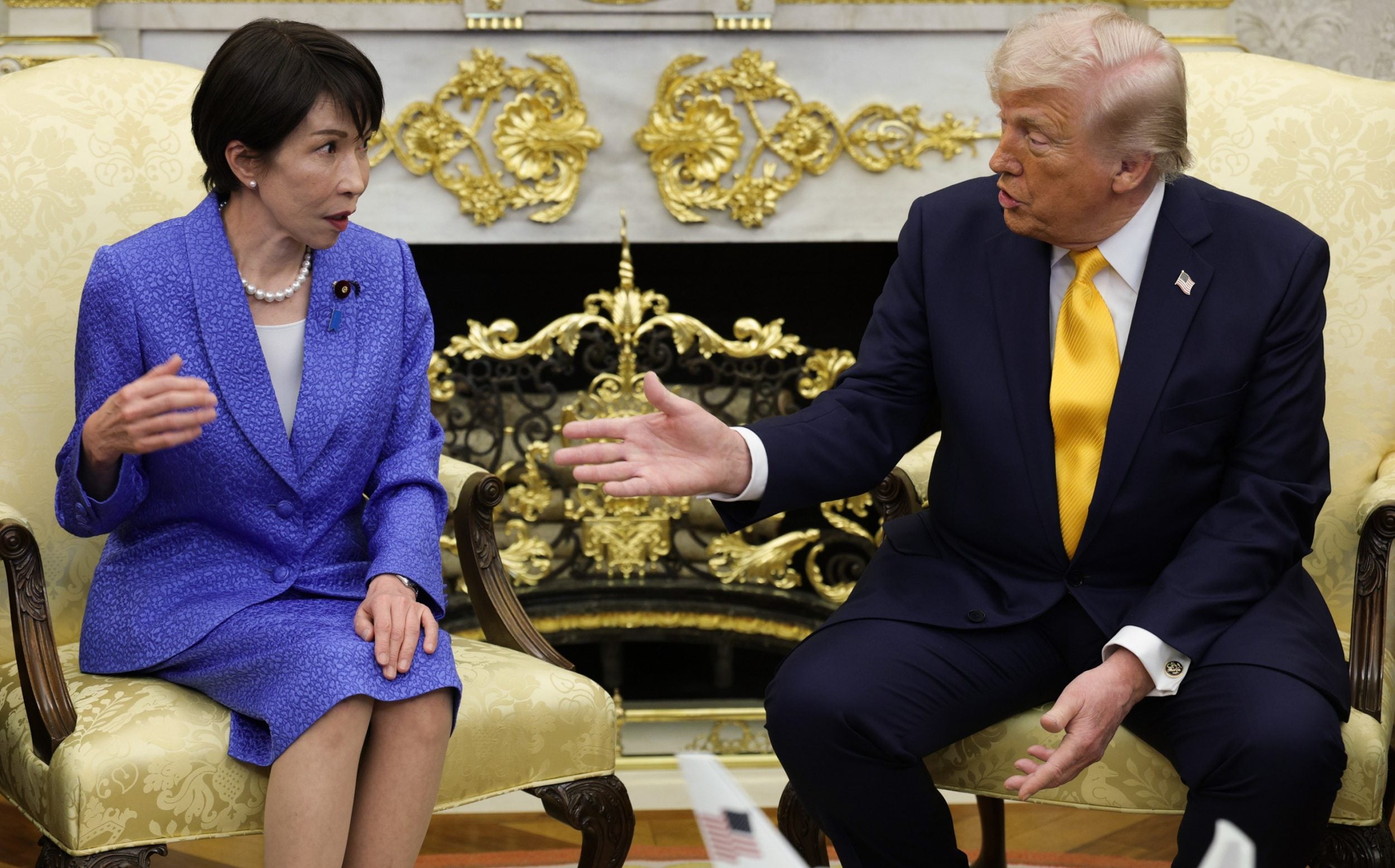
Japan’s Sanae Takaichi and Donald Trump are both trying to avoid a bond sell-off - Alex Wong/Getty Images
This was to be partly funded by his trade war: tariff revenue was expected to raise $280bn a year. But a Supreme Court ruling in February wiped out most of that. The White House is now paying out more in refunds each month than it collects in fresh tariffs.
Now he has turned to Bessent, whose top priority has become cutting Trump’s interest rate bills.
These are getting unmanageable. Interest payments will total 3.3pc of GDP this year, up from a long-term average of 2.1pc. And that forecast is based on a 10-year bond rate of 4.1pc, rather than the current 4.7pc.
Little wonder that Bessent described himself as “the nation’s top bond salesman” last November. And, as it turns out, the nation’s top bond buyer.
After he announced on Wednesday that the Treasury would buy back twice as much 10-year-plus debt as previously planned between now and November, the yield on 30-year bonds dropped a full 0.1 percentage point – the largest one-day decline in a year.
It may not sound like much, but it would have saved $379bn in annual interest payments – if only the yield hadn’t immediately rebounded on Thursday.
Guillermo Felices, global investment strategist at fund manager PGIM, brands Bessent’s move “a double-edged sword”.
“It rings alarm bells, because if they are doing something then it’s because they think there is something that is not right,” he says.
The move would deter short-sellers, he says, but wouldn’t distract long-term investors from the state of US finances.
“There’s a question mark about what will happen next, about reining in some of the excesses that you see in public sector spending. We’re not seeing that anywhere.”
Bessent, perhaps shaken by how quickly the market shrugged off his bazooka, said on Thursday that he was up for spending even more than $4bn to prop up the market.
But there’s a whack-a-mole element to this. In stomping on bond yields, he has triggered a tumble in the US dollar. That has investors again questioning the greenback’s long-term future as the world’s reliable reserve currency.
The gold price also jumped, amid fears that bullion might be the only safe place to hide from inflation.
But Bessent can’t keep buying forever. He has to fund the purchase of long-term bonds by selling short-term bonds, and that carries its own risks.
This shift of treasury issuance towards bills and notes maturing in under 10 years began under Trump’s Democratic predecessor, Joe Biden. They now comprise almost one quarter of outstanding US debt.
These bonds are more vulnerable to a Truss-style meltdown from over-leveraged hedge funds, which now own 8.5pc of all treasury bonds – more than Japan, China, and Saudi Arabia combined.
Bills and notes are also more vulnerable to changes in the Federal Reserve’s benchmark interest rate. More than one fifth of the US debt burden has to be restructured every few months, and that happens at prevailing rates.
So it’s little wonder that Trump has spent the past 18 months urging the central bank to cut its benchmark rate.
The markets, by contrast, reckon that, if anything, the Fed needs to raise the rate, to fight America’s sticky inflation.
But they’re not sure what Kevin Warsh, the Fed chairman, and his fellow governors think.
Warsh has made a virtue of saying less than his predecessor, Jay Powell, which is adding to the general sense of market trepidation about how the year will unfold.
Central bankers including Warsh will gather for the annual Jackson Hole event late this week, adding to the scrutiny.
The fear is that Warsh may be willing to sit pat on rates, and let Trump get away with so-called “fiscal dominance” and “financial repression”.
This basically means allowing inflation to erode the value of the government’s long-term debts, making them cheaper to pay off.
It can also mean that central banks connive in keeping bond yields artificially low, by buying them up like Bessent is doing.
It lets politicians avoid hard budget decisions. But it’s usually associated with banana republics rather than the countries at the fulcrum of the financial system. And eventually gets punished in the bond market.
“If you’re going to cheat, or have a stealth target of higher inflation, eventually the market will notice and will start questioning your credibility,” says Felices.
“That’s why chair Warsh was so strong in his statements about fighting inflation. The problem is that he hasn’t walked the talk. So the markets are starting to doubt, which is not ideal.”
But if Warsh does raise rates, he’ll risk sinking the main life raft: the US economy.
At the moment, the AI boom is driving that economy. Capital investment is 2pc of GDP, and the buoyant stock market is fuelling consumer spending by the richer half of American households.
“As long as those two conditions hold, that’s the get-out-of-jail-free card. In addition to the fact that the dollar is the reserve currency,” says Brusuelas.
The biggest wins of Bessent’s career have come as a hedge fund investor. But he obviously hopes to be just as successful playing the market for the government team.
“What we’re trying to do is create market signals,” he told Fox Business last month. “In essence, trying to tell investors, ‘OK, here’s where the puck’s going to be, skate to it quickly’.”
It’s not clear the market is reading those signals quite as he intended, or whether they want to skate where he’s telling them.
It perhaps didn’t help that Trump bizarrely suggested on Friday that the “ultimate type of [market] intervention could be the military” when asked whether Bessent would step in again.
Bond vigilantes have a habit of doing the opposite of what they’re told. And they are stirring.
“They’re certainly more alive than they were two years ago,” says Sonal Desai, chief investment officer at Franklin Templeton.
“There are enough things happening together that it’s uncomfortable, let’s put it that way. It’s not a great place to be.”
If this isn’t a great place, we can only hope it’s not just a staging post to one that is even worse.
Try full access to The Telegraph free today. Unlock their award-winning website and essential news app, plus useful tools and expert guides for your money, health and holidays.
Source: “AOL Money”
