


Nick Knowles interview: Why I am giving rugby Wrexham’s Hollywood treatment
Nick Knowles interview: Why I am giving rugby Wrexham’s Hollywood treatment

Gavin MairsSun, August 9, 2026 at 5:45 AM UTC
0
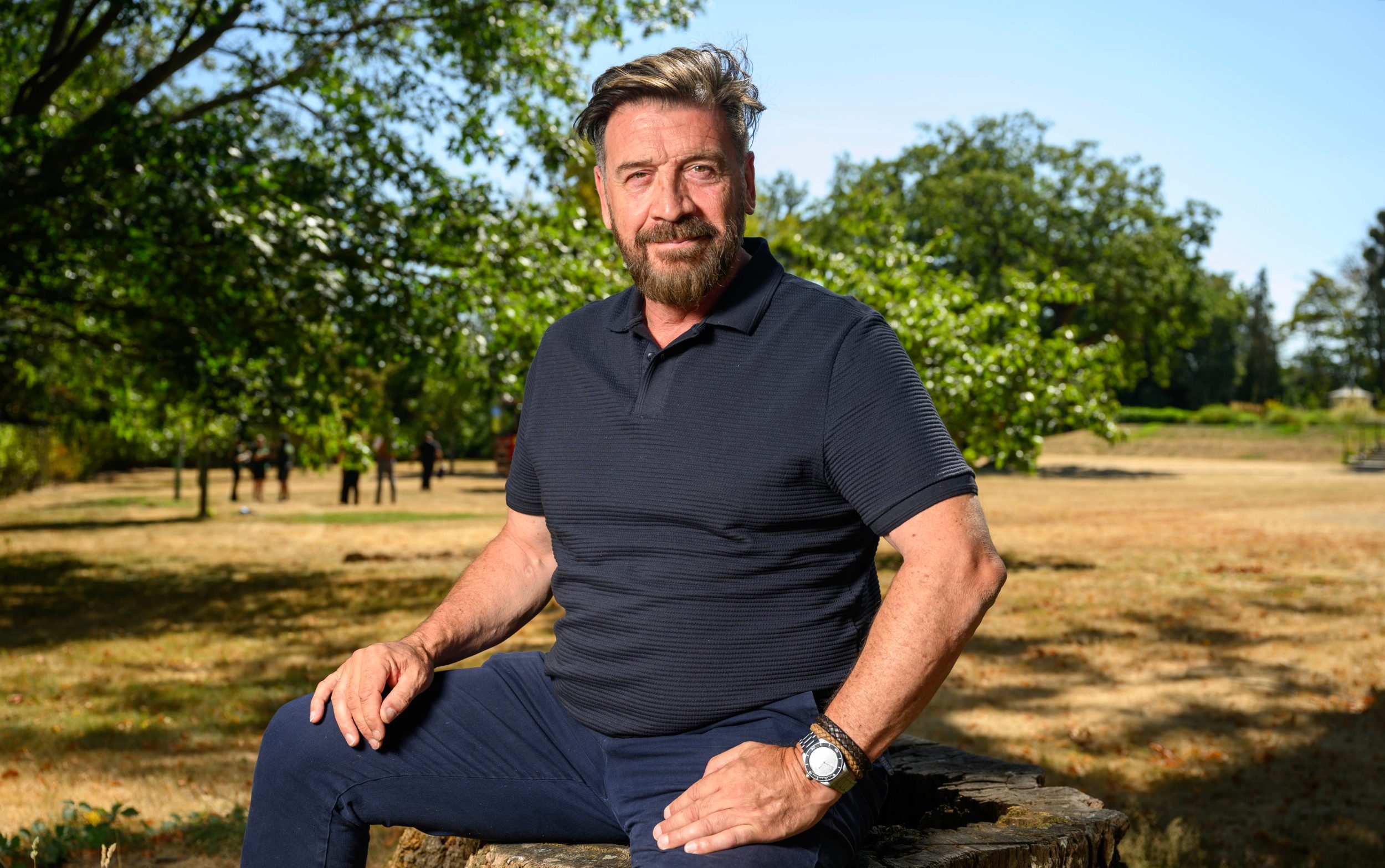
Nick Knowles’ passion for Cornwall and rugby inspired him to become an investor in Champ side Cornish Pirates - Paul Grover for The Telegraph
“I love rugby. I love Cornwall. I love a pasty,” declares Nick Knowles, with a hearty laugh.
The TV presenter – best known for hosting the BBC show DIY SOS – is explaining his decision to become an investor in Cornish Pirates, who play in the second tier of English club rugby, and the prospect of making a documentary about their against-the-odds attempt to make it to the top flight.
Knowles is the latest investor in the club after Stonewood Capital, the American private equity firm, agreed a seven-figure deal for a minority stake in Penzance-based Pirates, in May.
Comparisons have been drawn with the investment by Hollywood actors Ryan Reynolds and Rob McElhenney in Wrexham FC and the subsequent success of the sports documentary Welcome to Wrexham, which tells the behind-the-scenes story of the club’s attempts to reach the Premier League from the fifth tier of English football.
“There’s no point skirting around it and pretending those comparisons aren’t there,” says Knowles. “What a lot of people don’t understand when they watch Welcome to Wrexham – because I’ve actually heard other football clubs going, ‘Oh, we’re going to do that about this club or that club’ – is what it really rests on.
“The worldwide fame of Welcome to Wrexham rests on two things. One is obviously that you’ve got Ryan Reynolds and the other lad – the other Hollywood guy – but the other thing is the millions of people who watch it aren’t all football fans.
“They’re watching for the people. It’s about the Welsh miners, it’s about the history of Wales and fighting for their place in society, from the mines closing and what it did to the area. It’s about the guy who’s running the food truck outside who can’t quite make ends meet and then can’t quite believe what’s happening to his beloved team. It’s about the elderly couple who do the podcast who nobody listened to.
“The main sponsor of the team at that stage, made farm trailers, and now Ryan Reynolds is doing adverts for a local farm trailer company. There’s comedy in that, but also… they’re watching for the people. And when people in America come over to Wrexham to go to the game, they also want to go to the pub to see the bloke they’ve seen in the pub, see the podcast people, go to the corner shop where they’ve seen people talking.”
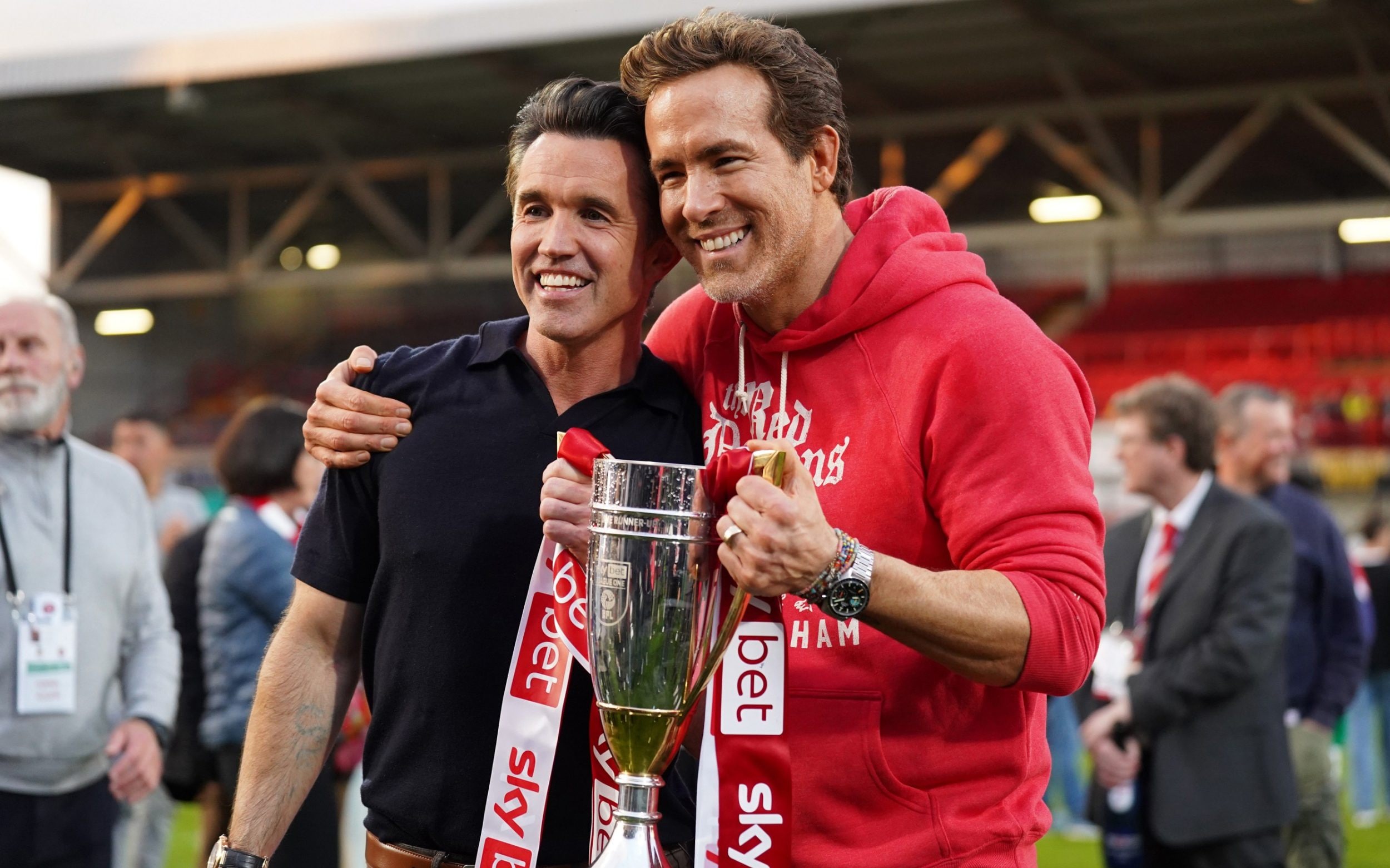
Wrexham’s owners, Rob McElhenney and Ryan Reynolds, and the community the smash hit series about the club has focused on, have inspired Knowles’ investment - Kya Banasko/Getty Images
Knowles is adamant that the Pirates have an equally compelling story to tell, from a county that once sent more than 40,000 supporters – a tenth of the population – to Twickenham to see Cornwall defeat Yorkshire in the County Championship final in 1991.
“When I looked at Cornish Pirates, you’ve got the history of Cornwall, which is phenomenal. You’ve got a Celtic history; you’ve got a massive fanbase which is like a sleeping giant. Rugby is as much part of their culture there as fishing or tin mining or anything else.
“Cornwall has that identity, spirit, has that love of rugby,” he says. “If I can strap all those things together, and then make something that’s stunningly beautiful… and then weave in all of these beautiful characters… I’d want to watch it, and I wouldn’t have to be a rugby fan to watch it.
“I want the series to be a postcard to Cornwall, a love letter to Cornwall, with a sporting underdog story running through it.”
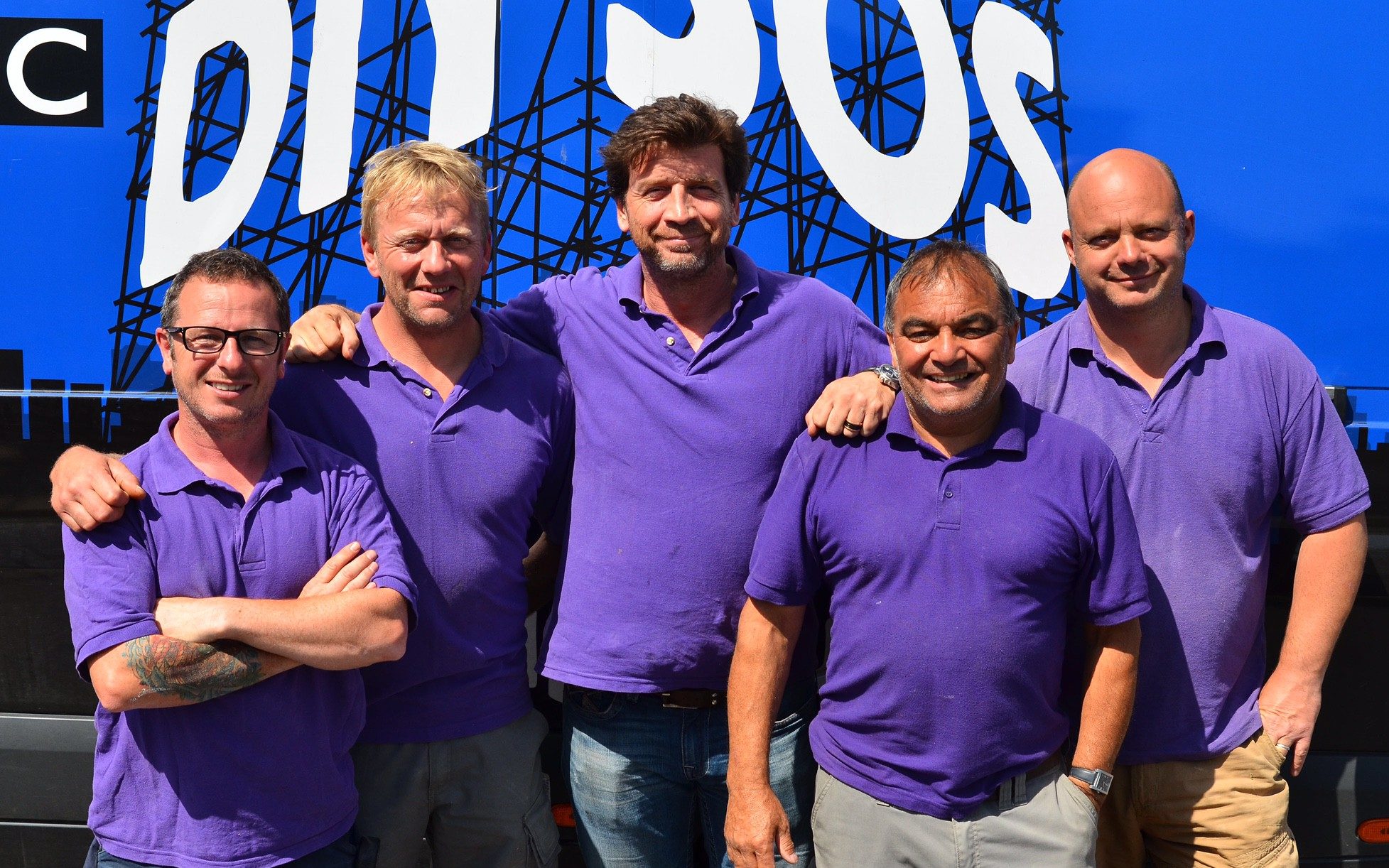
Knowles is best known for hosting BBC show DIY SOS - BBC
In the last year, a number of American investors have declared their interest in investing in rugby in England. The entry point is far cheaper than investing in the established US sports and the potential for commercial growth is substantial.
J Kenneth Moritz and John H Tippins of the Pittsburgh-based Stonewood Capital agreed a seven-figure deal for a minority stake in Cornish Pirates in May after local businessman Richard Wastnage had also joined the board. Sally Pettipher, the Pirates chief executive, described the deal as “transformational”.
“The new investors came over, looked at it, kind of fell in love with it – not just the rugby club – and went, ‘Yeah, I can see this,’” adds Knowles. “They are investing because they believe in the long‑time vision, not short‑term returns.” He believes the documentary can open the doors for further investment.
“Then you can go to the Americans and they see, ‘Oh, if we invest at this level, we’ve got a hell of a story to tell,’” he says. “We can make people in America fall in love with this Celtic nature of Cornwall and all the Arthurian legend and all the mystical, mythical, lovely stuff that goes with it – the sea‑shanty singing, Fisherman’s Friends movie, all that stuff and you can get the money rolling in. You’re selling that whole dream.
“You’ve got the World Cup coming up in America [in 2031], it’s not for no reason at all that American investors are taking an interest.”
The Pirates, like Wrexham, are also starting from a low base. They finished in eighth place in the Champ, and Storm Goretti laid waste to their Mennaye Field ground in January. “There’s no roof, no toilets, no showers – it’s hell on earth,” says Pettipher. “But you just have to keep putting one foot in front of the other, don’t you?”
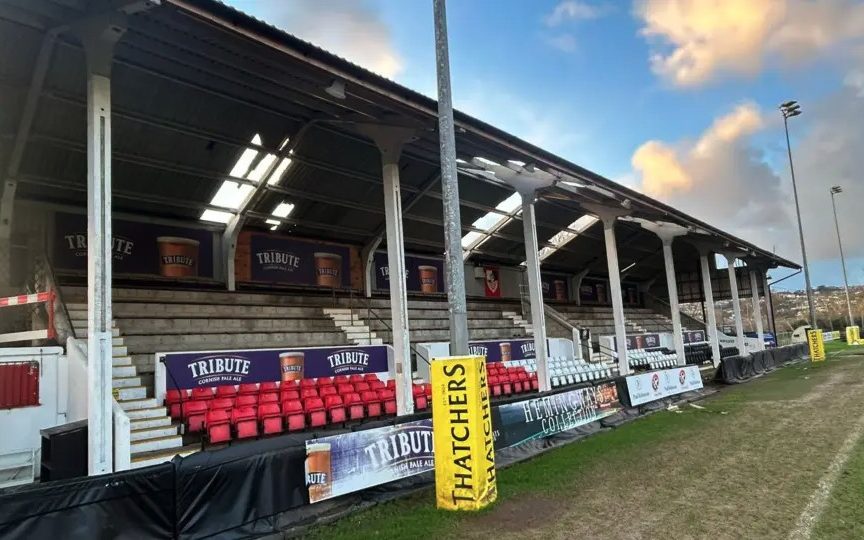
Sections of the roof of the main grandstand at Mennaye Field were ripped off by Storm Goretti - BBC
Time is also not on their side. The Prem, in conjunction with the Rugby Football Union, is implementing a franchise-based system next year, with the hope of expanding the league from 10 to 12 clubs for the 2029-30 season.
Bids will be assessed on standard of play, finances, investment potential, infrastructure and how their geographical base could help spread the Prem’s appeal, among other factors. The Pirates will need to find a solution to their stadium for starters.
“The stand has gone. We’re rebuilding that. That won’t be ready for the start of the season, unfortunately,” adds Knowles. “What other business do you know that has only 16 trading days a year? How do you turn a profit with only 16 trading days out of 365? We’ve got to be really creative.
“You’ve also had a lot of English clubs go bust because… to fulfil the expectations of being in the Premiership, they’ve had to overspend more than they could afford. To build a financial model that works and is sustainable should be something the RFU are 100 per cent behind.
“We’ll have constructive conversations with everybody and that will include Bill [Sweeney, the RFU’s chief executive]. Rugby isn’t just people turning up at expensive hospitality in Twickenham.”
By comparison, Knowles draws inspiration from what he sees as a “heartland” of rugby in Cornwall, the county he fell in love with during many family holidays, having grown up on a council estate in Southall, west London. “Cornwall life has been as much a part of me as anywhere in the UK,” he says. “If I could, I would live there, but I can’t with my work.
Advertisement
“The players we’ve been able to hold on to this year, one is sponsored by the local fish and chip shop, another by the farm shop at Land’s End, another by the local scaffolding firm.
“Our No 8, Tomiwa [Tomi] Agbongbon, who is a monster is being sponsored this year by a group of 10 dyed‑in‑the‑wool supporters from the ‘Naughty Boy Corner’ of the ground who banded together to put in enough money between them to keep him at the club.
“Tomi is phenomenal, and you won’t meet a lovelier guy. He is an incredibly dynamic No 8 in the sort of Henry Pollock style – fast, physical, proper box office. For me that’s heartland rugby.”
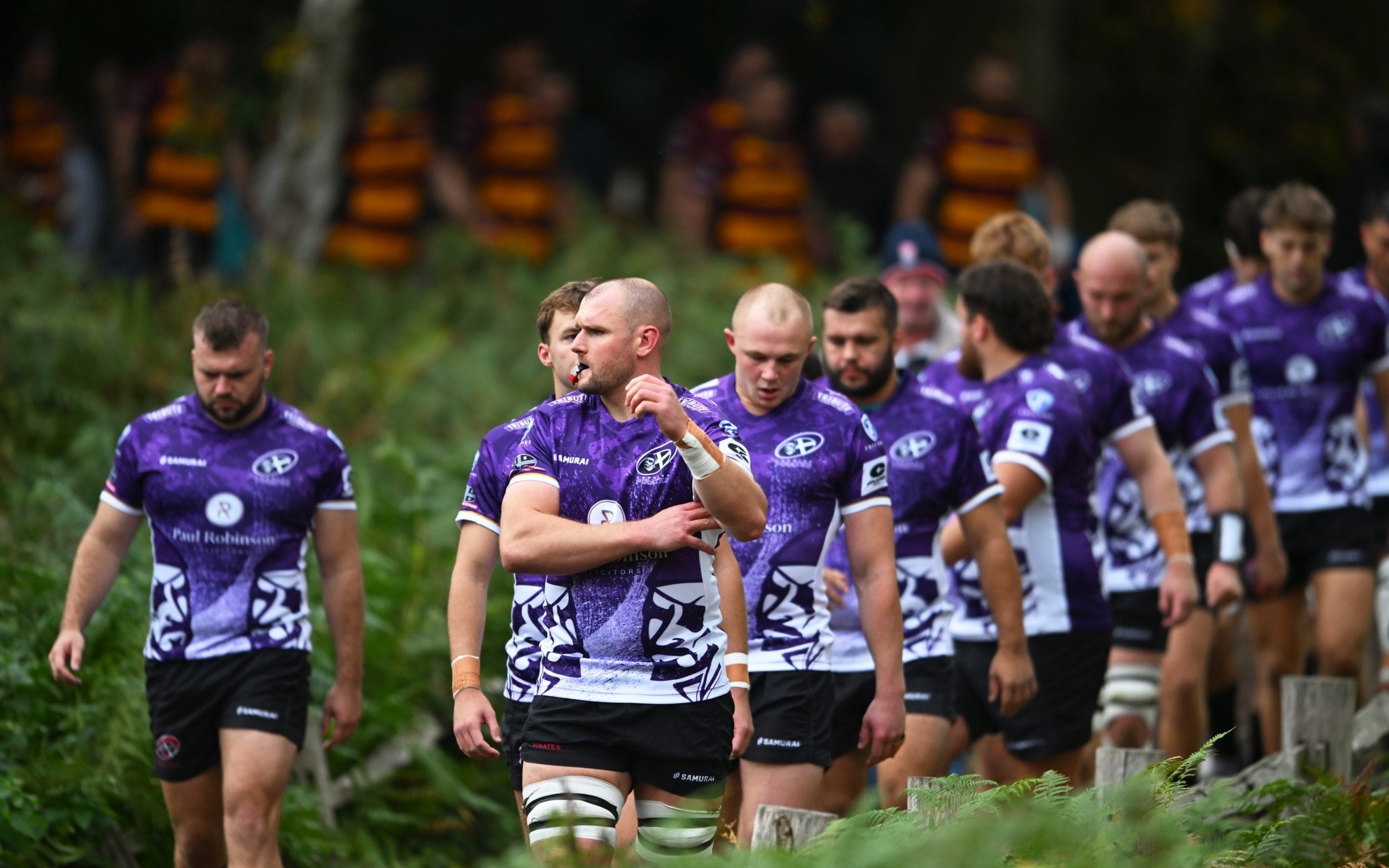
Pirates players are sponsored by a range of businesses in the local area for the season ahead - Harry Trump/Getty Images
There is a touch of “heartland” rugby about Knowles too. He is 63 but looks at least 10 years younger and exudes an infectious and boyish enthusiasm for rugby, the game he fell in love with when he first went to Twickenham to watch England play Ireland in the 1974 Five Nations championship with his brother John.
“Those were the days when you could park outside the stadium, buy a ticket and walk in,” he recalls. “I was 11, wearing a Union Jack hat and was standing in an Irish crowd with my brother. The first thing I remember was a bottle of whiskey coming down the line and it being handed to me and taking a swig.
“Mike Gibson, the great Irish centre, was playing for Ireland. I don’t know what age he was, but he was nearing the end of his career. When the ball was being passed along the Irish line, my brother shouts out ‘Gibson, where is your wheelchair!’ At which point Gibson breaks through and scores a try and all the Irish crowd pick up my brother and start hugging him.
“I’ve always loved that about rugby. You could be in amongst the opposition and having banter with them.
“We [England] beat Wales the year I was born in ’62 in Wales, and I had to wait until I was 21 before we did it again. My Welsh cousins [from just outside Merthyr Tydfil] just berated me every year,” he says. “Which is why you’ll find me on social media getting stuck in with people and having proper banter.
“It’s funny these days because, of course, we’ve got a lot of football people who have drifted over into rugby, and some people take offence at the banter. They don’t seem to get it, you know. Whereas all my Welsh mates are like, great, they’ll get stuck into me and I’ll get stuck into them.
“I was having a row online with a South African when Eben Etzebeth accidentally shoved his thumb in someone’s eyes. He was calling me all kinds of names online during this conversation, really having a go.
“Then I saw the thing about a fire at Penarth Rugby Club had a fire and the clubhouse burned down. They had a fundraiser, so I broke off from rowing with him to publish the fundraiser.
“Off the back of it, he wrote a comment to me about continuing the row. Somebody else said to him, ‘Are you tone deaf, mate? This is actually a fundraiser…’ He went, ‘Yeah, I’ve just put 50 rand in the kitty for it, which means I’m allowed to carry on having a go at him.’ And I went, ‘Fair play. Let’s carry on.’”
He started playing at the age of 10 for his school in Gunnersbury and never stopped. Everywhere his wanderlust took him – Samoa, Australia, Canada, to name a few destinations – he enhanced work trips by asking whether he could play a game while he was there, predominantly at flanker until he moved to centre in his latter years.
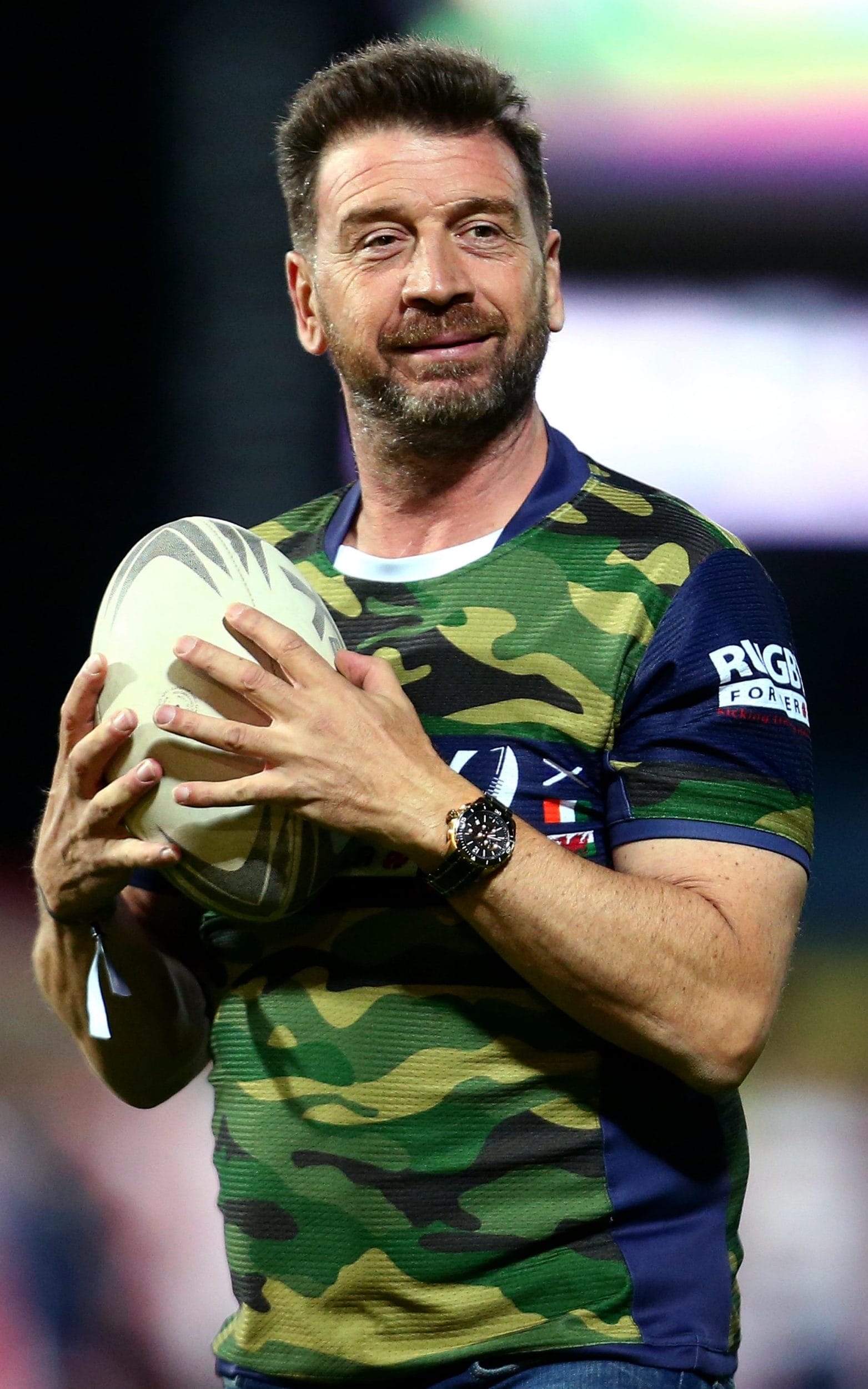
Knowles’ started playing at the age of 10 and has taken to the field in Samoa, Australia and Canada amongst other destinations - Robbie Stephenson/Shutterstock
“Rugby’s this amazing family worldwide,” he adds. “In 1988 I travelled to Australia and started playing a few games for the sort of minor side at Randwick and then moved down to Kaima. It was the most beautiful rugby ground in the world, a surf beach either side. My first training session it was 70 degrees at night and 80 per cent humidity. I was chucking up on the sidelines after about five minutes of running.
“But I instantly had 400 mates who would help me find a job and somewhere to live. I ended up working as a news reader for the local station. Later the players told me that if we were losing at half-time, one of them would tell the opposition that I was a newsreader so that I would be fighting for the whole of the second half – I was not a fighting player – as they wanted to give me a fat lip or black eye when I went back on TV. That was our club tactic!”
As a supporter on the Lions tour of New Zealand in 2017, he befriended a number of the players, including Rory Best, Dan Cole and James Haskell and attends matches at Bath when he can where his best-mate from school has a season ticket.
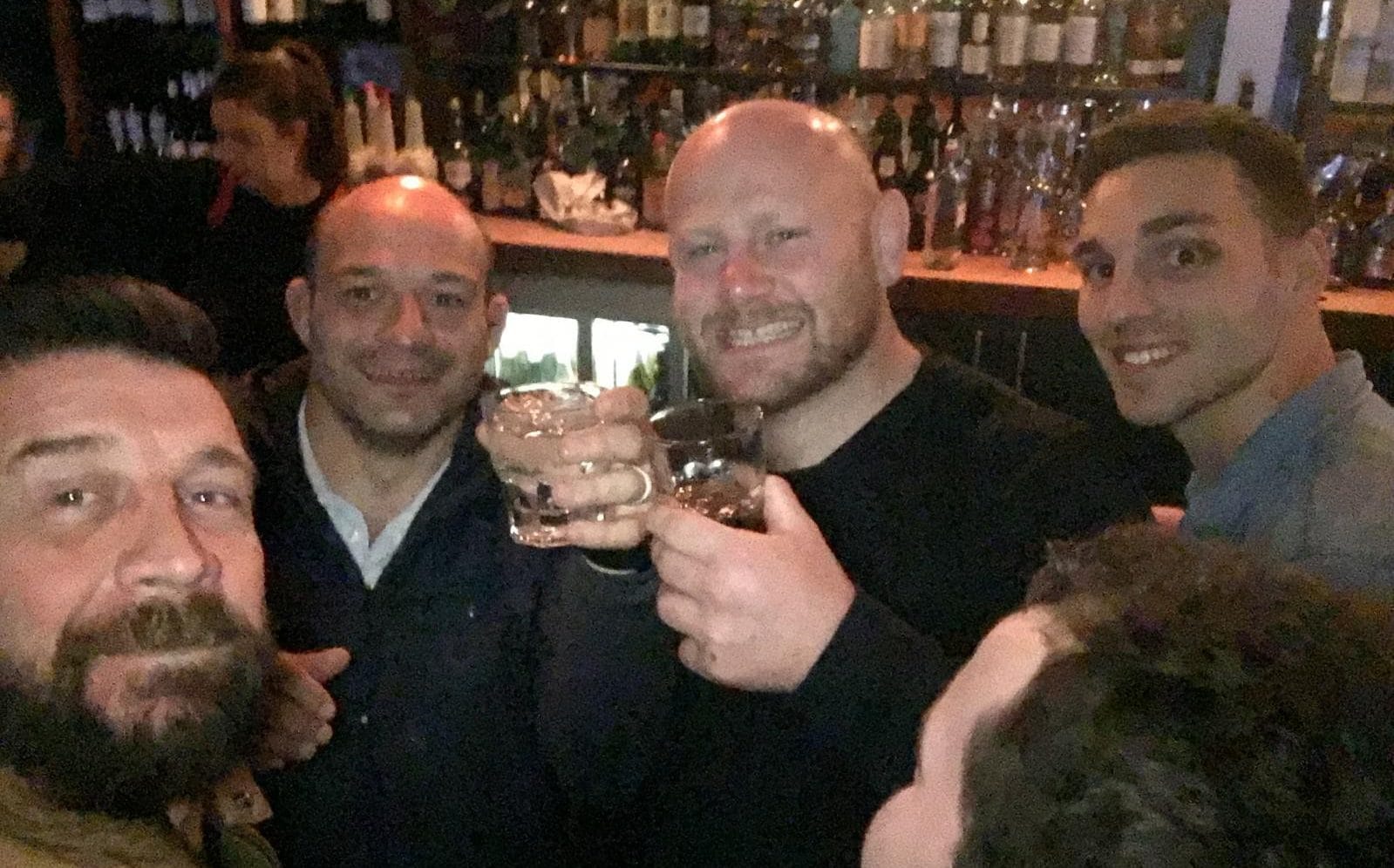
Knowles (left) is good friends with former professionals Rory Best (second left) and Dan Cole (centre)
He is also a prominent supporter and patron of Rugby for Heroes, a Cheltenham-based charity that helps military veterans transition back into civilian life through sport.
He played his last game two years ago in Buenos Aires at the age of 61 for an all‑ability side called the Pumpas XV.
“I couldn’t be in Argentina and not have a run‑out,” he says, as if it was the most obvious thing in the world. Having escaped with barely any injuries during a 51-year career (he did break a rib and hand attempting a tackle on a 22-stone flanker in Samoa), his worst injury came when he shattered his ACL and dislocated his knee while attempting the Charleston as a contestant on Strictly Come Dancing.
Now he has tapped up the best people he has worked with during his broadcast career to produce a pilot on the Pirates that he hopes to pitch to broadcasters and streamers in the next three months.
He is using the director who has worked for years with him on DIY SOS, a drone operator who has shot on Formula One and created a drone that travels at 200 miles an hour and shot the opening to a Batman and Sigourney Weaver film.
“We think he’s created a drone that’s small enough, with feather blades on it, that can follow the ball and put into the scrum and then fly out the other side,” adds Knowles. “We’re going to be able to fly on the shoulders of players.
“I am also bringing down a couple of cameraman mates of mine who shot Top Gear for the last 25 years, who are buddies who are coming and doing mates’ rates whilst we’re shooting this pilot. I want to create that beautiful movie feel to it.
“They [Reynolds and McElhenney] haven’t just bought a football club and gone: ‘This is what we’re doing.’ They’ve engaged with the whole community. We fully intend to do the same, because if you don’t take the whole community with you, you’ve got a team with no support.”
Source: “AOL Entertainment”
