


Harry will be welcomed back by veterans like me
Harry will be welcomed back by veterans like me

Hamish de Bretton-GordonSun, August 23, 2026 at 1:30 PM UTC
0
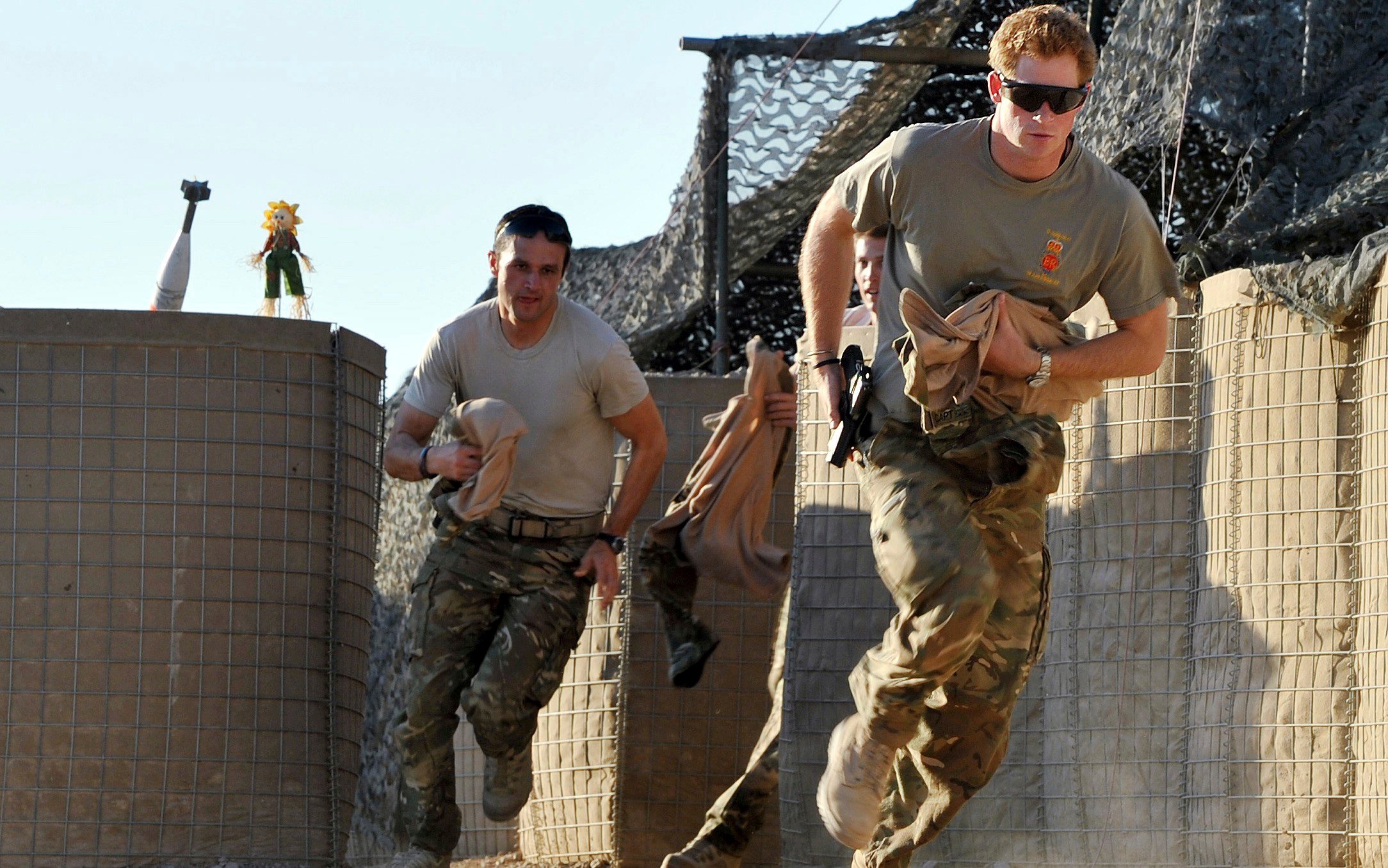
Prince Harry scrambling his Apache helicopter with fellow pilots at Camp Bastion, southern Afghanistan. - John Stillwell/PA
With all the hullabaloo surrounding the return of the Sussexes, there is one perspective that has been rather lost amid the royal soap opera: that of the veteran community. For many of us who have worn the uniform, Prince Harry’s return to Britain would be welcome – provided he comes back not merely as a prince, but as a champion of those who serve and have served.
With Andrew Mountbatten-Windsor banished from uniform and some of the older members of the Royal family becoming distinctly creaky, there is a growing problem of royal patronages and military appointments simply not receiving the attention they once did. Many regiments and ships would, I suspect, welcome Harry back in his old roles, or perhaps taking on new responsibilities as an Assistant Colonel Commandant. He could help to shoulder the burden carried by a shrinking number of working royals, especially King Charles.
It is worth remembering something that seems to be forgotten in the endless Sussex saga: Harry served two tours in Afghanistan. I was in the Afghan theatre during his first tour and know that these were not comfortable postings behind a desk, safely removed from danger. He went into a combat zone and, like thousands of other young servicemen and women, put his life on the line for his comrades. That matters to us.
Combat changes people. It does not affect everyone in the same way, and some of Harry’s more extraordinary outbursts and ideas will be familiar to those of us who have spent time around veterans. The difference is that most veterans enjoy relative anonymity. Harry does not. Everything he says and does is dissected, amplified and judged around the world. His wife’s views and actions are, frankly, her business. For veterans, the more important question is what Harry does with the considerable platform he still possesses.
Here, his record with the Invictus Games is compelling. Since its creation, the Games have become one of the most powerful global movements for wounded, injured and sick servicemen and women. Harry has been central to that success, championing veterans not just in Britain but across the free world and increasingly, and poignantly, those Ukrainians who have been wounded fighting Russia. That could hardly be more important at this moment.
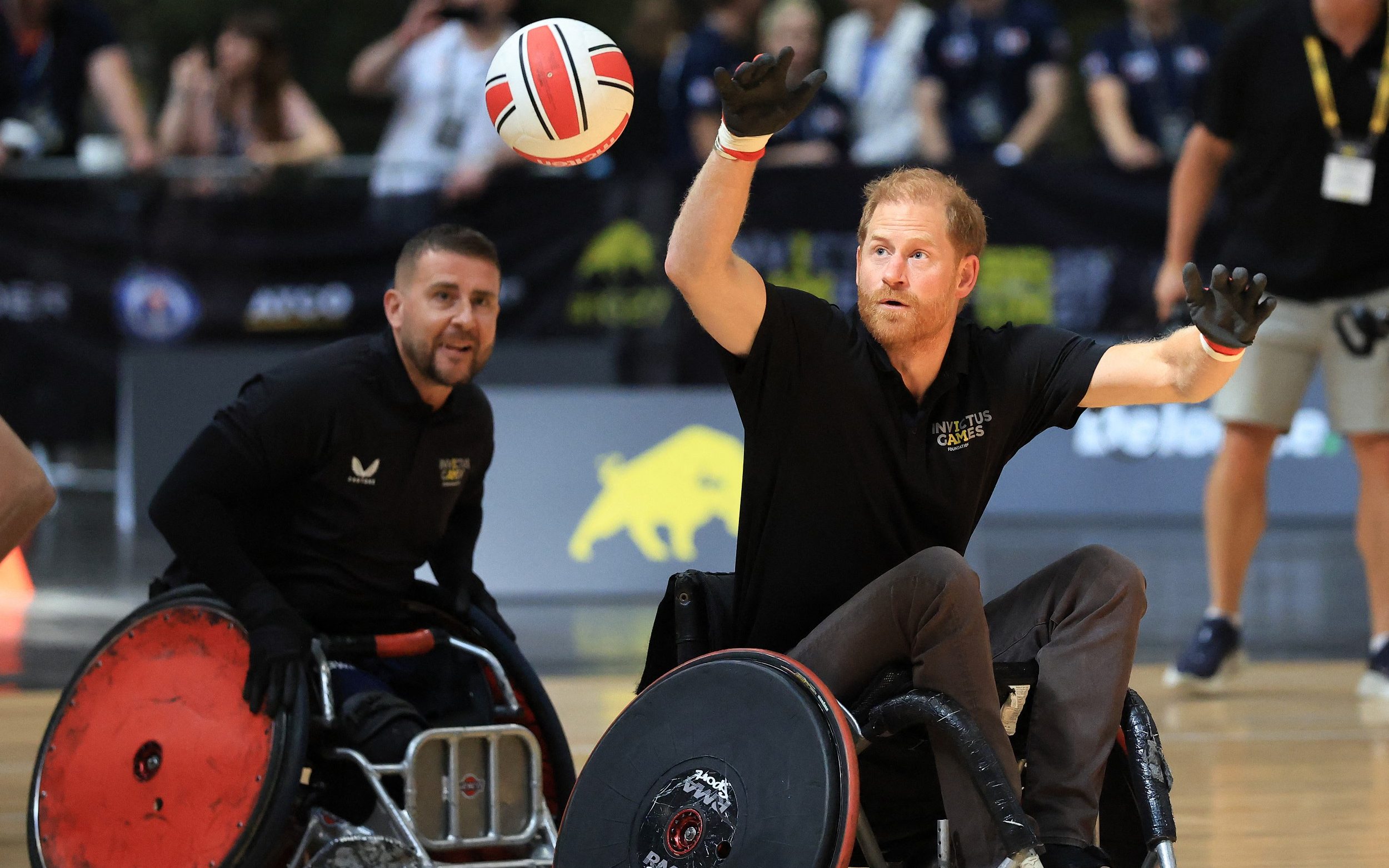
Harry, pictured playing wheelchair rugby, has been central to the success of the Invictus Games - DARREN STAPLES/AFP
As governments dither over the scale and speed of support for Ukraine, the moral significance of the Invictus movement should not be underestimated. These are men and women who have paid a physical and psychological price in defence of their countries. Next year, when the Games come to Birmingham, Harry has an opportunity to put veterans and the Armed Forces firmly back at the centre of his public life. I hope he takes it.
Whatever has been said and done since he left Britain, Harry’s most defining characteristic remains that he is a veteran. He has been there. He has experienced the fear, boredom, camaraderie and brutal uncertainty of military operations. Once you have crossed that line, it becomes part of who you are. It cannot simply be discarded and, speaking as a fellow veteran, I would not want it to be.
There is still a band of brothers and sisters who understand instinctively what it means to put your life in the hands of others and, in turn, to have others put theirs in yours. Harry is part of that fraternity. And Britain desperately needs more people prepared to speak for it.
Advertisement
Our politicians appear increasingly reluctant to confront the reality that the international security environment has changed fundamentally. Russia is waging war in Europe, China is building military power at extraordinary speed and the prospect of British servicemen and women once again being required to fight is no longer some distant theoretical possibility.
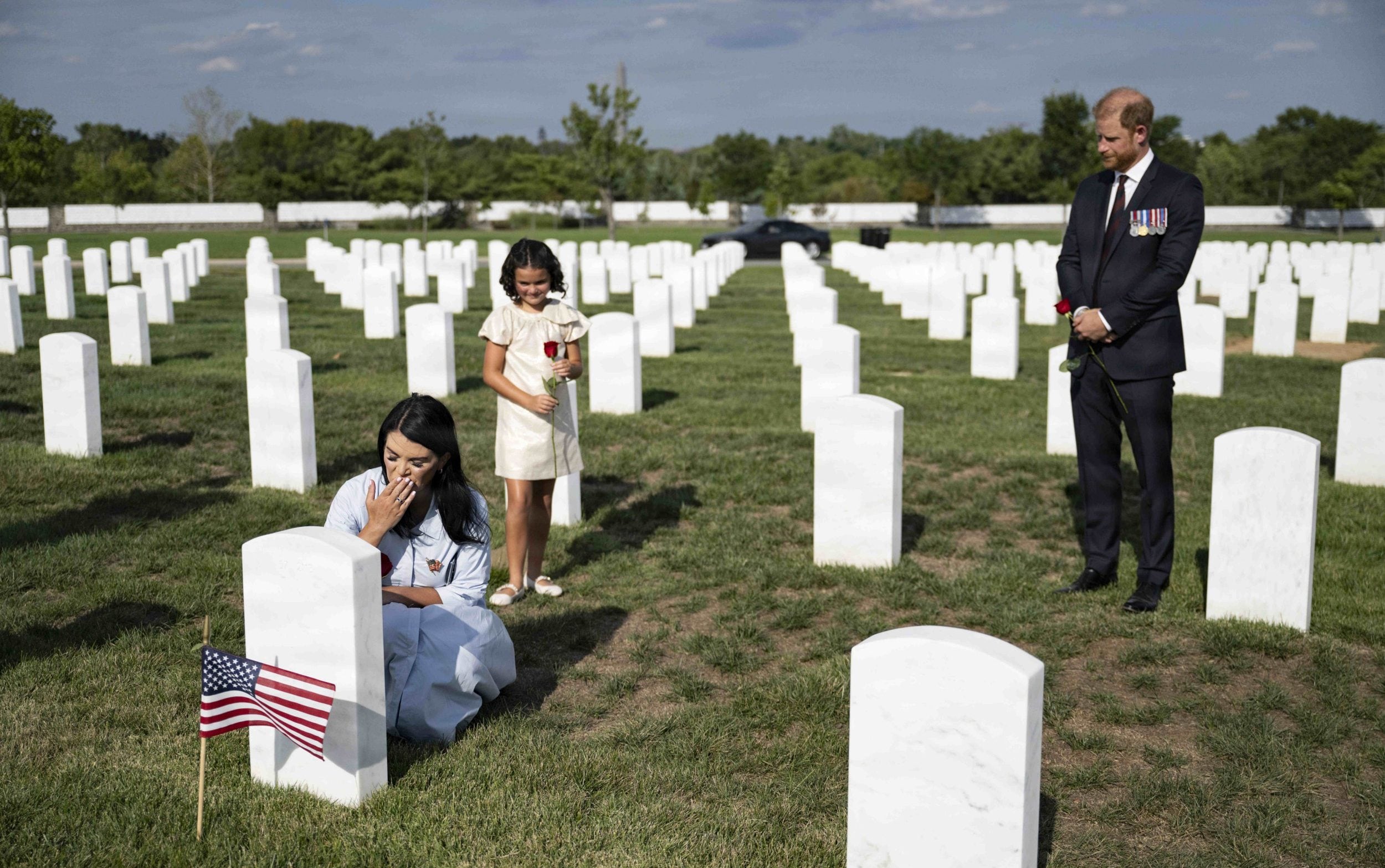
The Duke of Sussex, in a US war cemetery last week, understands the sacrifice of serving in the Armed Forces - Elizabeth Fraser/ZUMA Press
At precisely the moment when we need politicians with military experience and moral authority to make the case for defence, there are precious few of them left in the right positions. Harry could help fill that gap.
I would therefore welcome the King allowing him to resume a meaningful role with the Armed Forces, whether through his former regimental associations, new military patronages or other appointments. Not as a substitute for the senior working royals, but as reinforcement. The King has more than enough on his plate and should not be expected to do everything himself.
To begin with, Harry’s role in driving the Invictus Games in Birmingham could provide an important bridge back into British public life. Done properly, it would put wounded veterans, serving personnel and the cause of military service before royal family intrigue.
And perhaps, in the process, Harry could remind an increasingly inward-looking government of something rather fundamental: the first duty of any prime minister is the defence of the realm. Without security, everything else – economic prosperity, public services and the society we cherish – is built on sand.
The Sussexes may never escape the royal soap opera. But Harry can choose what comes next. For those of us who have served, I hope it is a return to the business he knows best: standing four-square behind Britain’s Armed Forces and the veterans who have sacrificed for them.
That would be a royal return worth welcoming.
Col Hamish de Bretton-Gordon is a veteran with 38 years of service
Source: “AOL Entertainment”
