


Aga Khan Museum Presents SpaceMosque, a Sci-Fi Art Exhibition Asking: What if all Your Prayers Were Answered?
Aga Khan Museum Presents SpaceMosque, a Sci-Fi Art Exhibition Asking: What if all Your Prayers Were Answered?

Tue, October 20, 2026 at 12:56 PM UTC
0
TORONTO--(BUSINESS WIRE)--Oct 20, 2026--
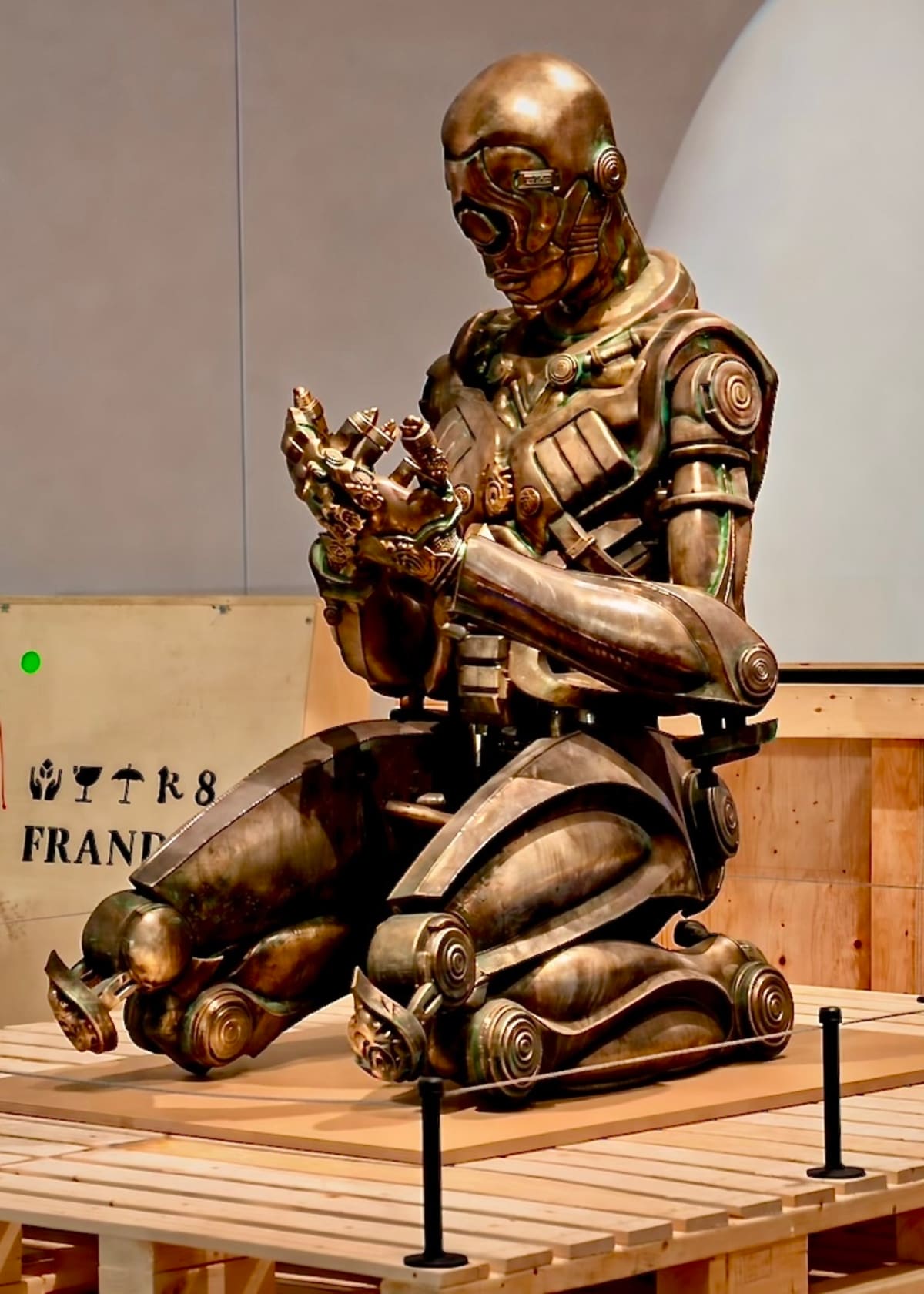
From October 24, 2026, to March 7, 2027, The Aga Khan Museum presents Saks Afridi: SpaceMosque to ask one question – what would happen if every person on Earth could have one prayer answered every 24 hours? The exhibition constructs an alternative history in which a spiritually conscious vessel, SpaceMosque, grants human wishes and exposes what happens when desire becomes power. Through sculpture, sound, video, para-fictional news reports and manufactured artifacts, Pakistani-born, New York-based artist Saks Afridi immerses visitors in his speculative world.
This press release features multimedia. View the full release here: https://www.businesswire.com/news/home/20261020767213/en/
Saks Afridi: SpaceMosque installation in action. Photo by Aly Manji, Aga Khan Museum
“ Saks Afridi: SpaceMosque invites us to consider what we wish for, who benefits and what happens when private desires acquire public consequences,” said Marianne Fenton, exhibition curator at the Aga Khan Museum. “By placing visitors inside an alternative history (a forgotten past), Saks creates space to examine how power can be used, concentrated and ultimately relinquished. We want to draw viewers into this imagined future that blurs speculation and evidence, where the sacred, the speculative, and the contemporary coexist.”
The Narrative In a forgotten recent past, a mysterious vessel appeared above cities around the world, taking a different form for each witness. First sighted over Karachi, Pakistan, where it resembled a futuristic mosque, it became known as SpaceMosque.
The vessel answered, potentially, one prayer for every person on Earth every 24 hours. What began as a miracle soon became a source of power, as governments, corporations and religious authorities sought to control it. Then the vessel vanished, taking nearly all memory of the event with it. Visitors encounter the fragmented artifacts, testimonies and archival traces left behind—and reconstruct the story for themselves.
Afridi himself explains, " SpaceMosque started with a question I couldn't shake: if every prayer were answered, would it change the world — or just yours? From there, I began building a world around that question. I wanted to explore human nature, what people would actually do in a world with these rules. I talked to journalists, economists, technologists and scholars to examine it from every angle, and the more the world built out, the more it became a case study in what happens when capitalism and commercialization take a dark turn."
The Experience SpaceMosque transforms the gallery into a speculative, working archive. Sculpture, sound, video, fictional news reports, architectural plans and recovered artifacts are presented as evidence of a forgotten global event. Visitors are invited to explore the materials, connect the clues and reconstruct the story for themselves. “It is as though the archivists have stepped away for a coffee break, leaving objects under examination and evidence spread across their worktables,” says Fenton. “Visitors can check the archive and decide for themselves what happened—and what its fragmented history may reveal about our own world.”
For the Aga Khan Museum presentation, Afridi and curator Fenton have developed new immersive elements that deepen the para-fictional world. The exhibition also includes a collaboration with students from Toronto Metropolitan University’s architectural science program, who created “speculative designs” that examine how prayer/wants might be harnessed, commercialized, and built into infrastructure.
“ Saks Afridi: SpaceMosque reflects the Aga Khan Museum’s commitment to presenting art that opens up new ways of thinking about the world we share,” says Dr. Sascha Priewe, Director, Collections and Public Programs at the Aga Khan Museum. “By exploring faith, technology, power and human desire, the exhibition connects to our broader strategy of bringing forward contemporary artists whose work challenges assumptions, connects cultures and invites meaningful dialogue about our shared future.”
Saks Afridi: SpaceMosque opens to the public on Oct. 24, 2026, and an additional lineup of performances and activities will be introduced to complement the exhibition. Visitors can see this exhibition as well as the permanent collection of the Museum for free on BMO Free Wednesdays from 4 p.m. to 8 p.m. Youth aged 25 and under can enjoy free admission any time during the Museum’s opening hours.
About Saks Afridi Pakistan-born Saks Afridi is a multidisciplinary artist based in New York City. His work occupies a self-defined genre he calls “Sci-Fi Sufism,” a spiritual and speculative practice that fuses mysticism, narrative, Sufi poetry, South Asian folklore, Islamic mythology, science fiction, architecture and calligraphy to explore the inner quest for meaning.
Afridi’s practice also examines the “Insider Outsider,” his term for the pursuit of belonging while feeling out of place. Through this lens, he recontextualizes cultural and historical narratives to reflect on displacement, dual identity and transcultural joy. Drawing on his advertising background, Afridi collaborates with painters, architects, artisans, designers, 3D modellers and fabricators to realize his work. His interest in analog technologies also informs sculptures in which mechanical parts become poetic devices. He studied advertising at the Academy of Art and sculpture at the Art Students League of New York.
About the Aga Khan Museum The Aga Khan Museum in Toronto, Canada, has been established and developed by the Aga Khan Trust for Culture (AKTC), which is an agency of the Aga Khan Development Network (AKDN). Through permanent and temporary exhibitions, educational activities and performing arts, the Museum’s mission is to spark wonder, curiosity, and understanding of Muslim cultures and their connection with other cultures through the arts. Designed by architect Fumihiko Maki, the Museum shares a 6.8-hectare site with Toronto’s Ismaili Centre, which was designed by architect Charles Correa. The surrounding landscaped park was designed by landscape architect Vladimir Djurovic.
Advertisement
View source version on businesswire.com:https://www.businesswire.com/news/home/20261020767213/en/
CONTACT: FOR PRESS INQUIRIES, PLEASE CONTACT:
Eric Tang
Front Street Partners
eric.tang@frontstreetpartners.ca
416.822.0541
Aga Khan Museum
press@agakhanmuseum.org
416.858.8735
KEYWORD: NORTH AMERICA CANADA
INDUSTRY KEYWORD: ARTS/MUSEUMS GENERAL ENTERTAINMENT ENTERTAINMENT
SOURCE: Aga Khan Museum
Copyright Business Wire 2026.
PUB: 10/20/2026 08:55 AM/DISC: 10/20/2026 08:56 AM
http://www.businesswire.com/news/home/20261020767213/en
Source: “AOL Entertainment”
